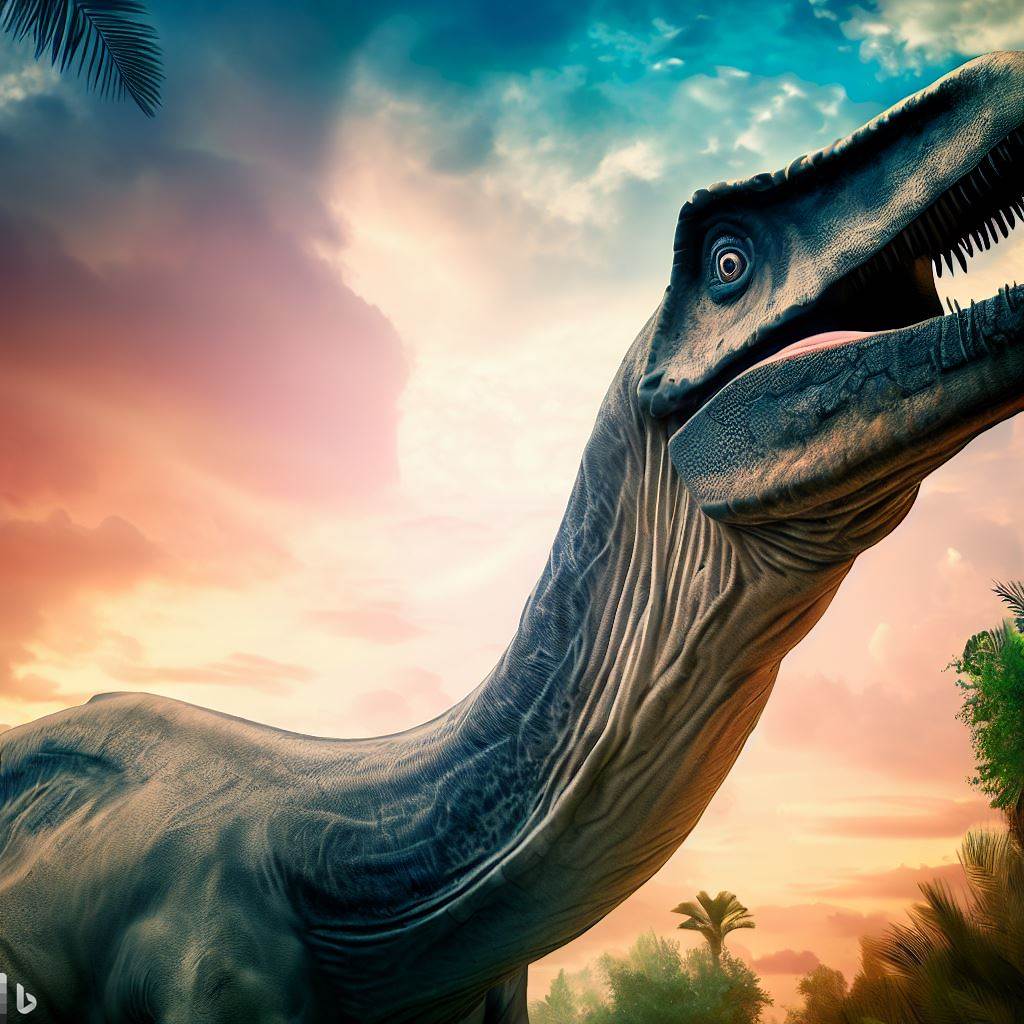
Titanosaurus
Titanosaurus is a genus of sauropod dinosaur that lived during the Late Cretaceous period, approximately 70 to 66 million years ago. The name Titanosaurus means “titanic lizard” and is derived from the Greek words “titans” (giant deities in Greek mythology) and “sauros” (lizard).
Titanosaurus was first described based on fragmentary remains discovered in India in the 19th century. Since then, numerous species have been assigned to the genus Titanosaurus, although the classification and identification of Titanosaurus species are complex and debated among paleontologists.
As a sauropod, Titanosaurus was a large, long-necked, herbivorous dinosaur. It had a massive body supported by pillar-like legs and a long tail. The neck and tail were used for reaching vegetation and for balance, respectively. Its limbs were robust, and it walked on all four legs. Titanosaurus had small, peg-like teeth and likely fed on plants, using its long neck to browse from treetops or reach vegetation on the ground.
Due to the fragmentary nature of the fossils and the lack of complete skeletons, the exact size and appearance of Titanosaurus are uncertain. Estimates suggest that it could have reached lengths of up to 30 meters (98 feet) and weighed several tons, making it one of the largest known dinosaurs.
It’s important to note that the classification and understanding of Titanosaurus have evolved over time, and there is ongoing research and debate among scientists regarding the taxonomy and relationships of the various species assigned to this genus.


コメント